Overview
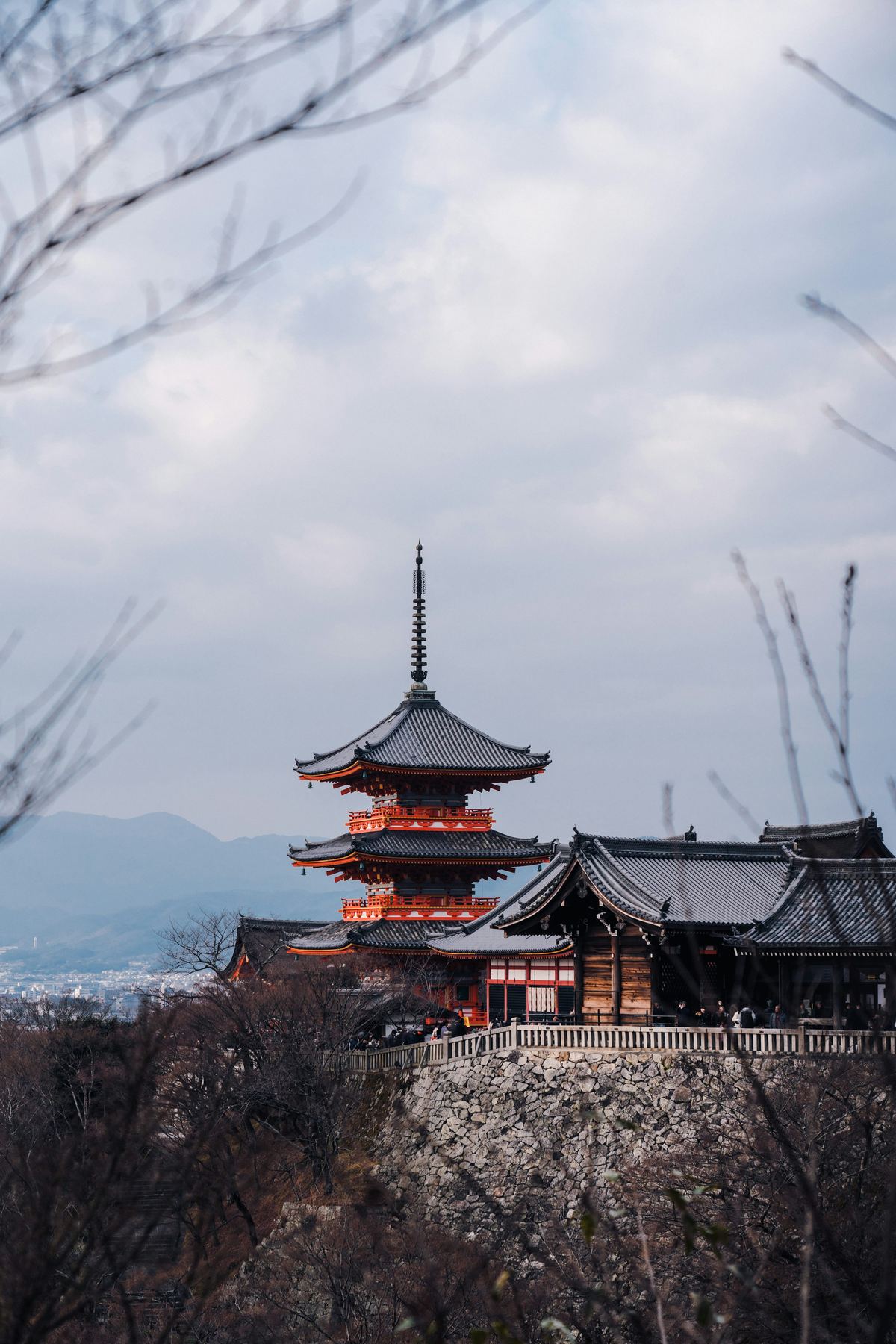
Kiyomizu-dera, the "Pure Water Temple," is Kyoto's most celebrated temple and one of its most enduring symbols. A UNESCO World Heritage Site, it was founded in 778 AD on the forested slopes of Mount Otowa in the Higashiyama hills. The name honors the Otowa Waterfall beneath the main hall, whose clear waters were once believed to grant health, longevity, and success. Today the temple draws millions of visitors each year, who come to marvel at its famous wooden stage — a vast terrace that juts out over the hillside, supported by a lattice of interlocking cypress beams and held together without a single nail.
Practical Information
Kiyomizu-dera is open every day from 6:00 AM to 6:00 PM, with hours extended to 9:00 PM during the spring and autumn night illuminations. Entry costs ¥400 for adults and ¥200 for children, covering the main hall and the Otowa Waterfall.
Getting there: Take city bus 206 from Kyoto Station (about 30 minutes) to the Kiyomizu-michi stop, then walk ten minutes uphill through the historic streets. The temple is the natural start or end point of most Higashiyama walking routes.
Location
The Wooden Stage
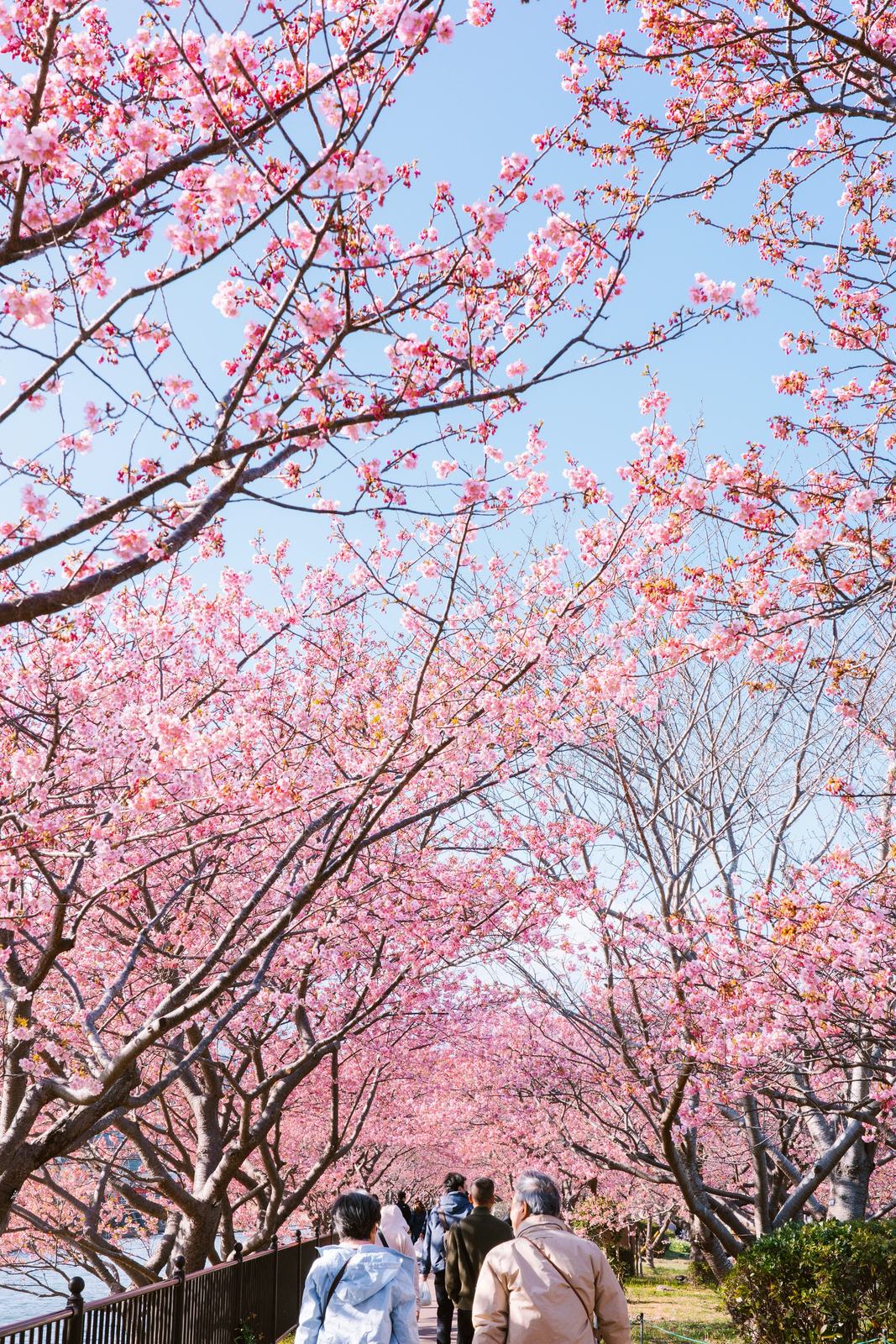
The Kiyomizu Stage is the temple's crowning glory. Rising 13 meters above the hillside, it offers sweeping panoramic views over the rooftops of Kyoto and, on clear days, all the way to the mountains beyond. The stage is especially magical during cherry blossom season, when the surrounding hillsides erupt in soft pink, and again in autumn, when the maple forests turn deep crimson and gold. An old Japanese saying — "to jump off the stage at Kiyomizu" — means to take a great leap of faith, recalling the days when visitors leapt from this platform to test their courage, gambling that their wishes would be granted.
Night Illuminations
Twice a year, in spring and autumn, Kiyomizu-dera holds special evening openings with dramatic lighting. The wooden stage, the three-story pagoda, and the maple trees are bathed in warm, shifting light while the city twinkles far below. These evenings are among Kyoto's most atmospheric experiences and draw large crowds, so arrive early and be prepared for a slow, steady flow through the grounds.
Walking the Approach
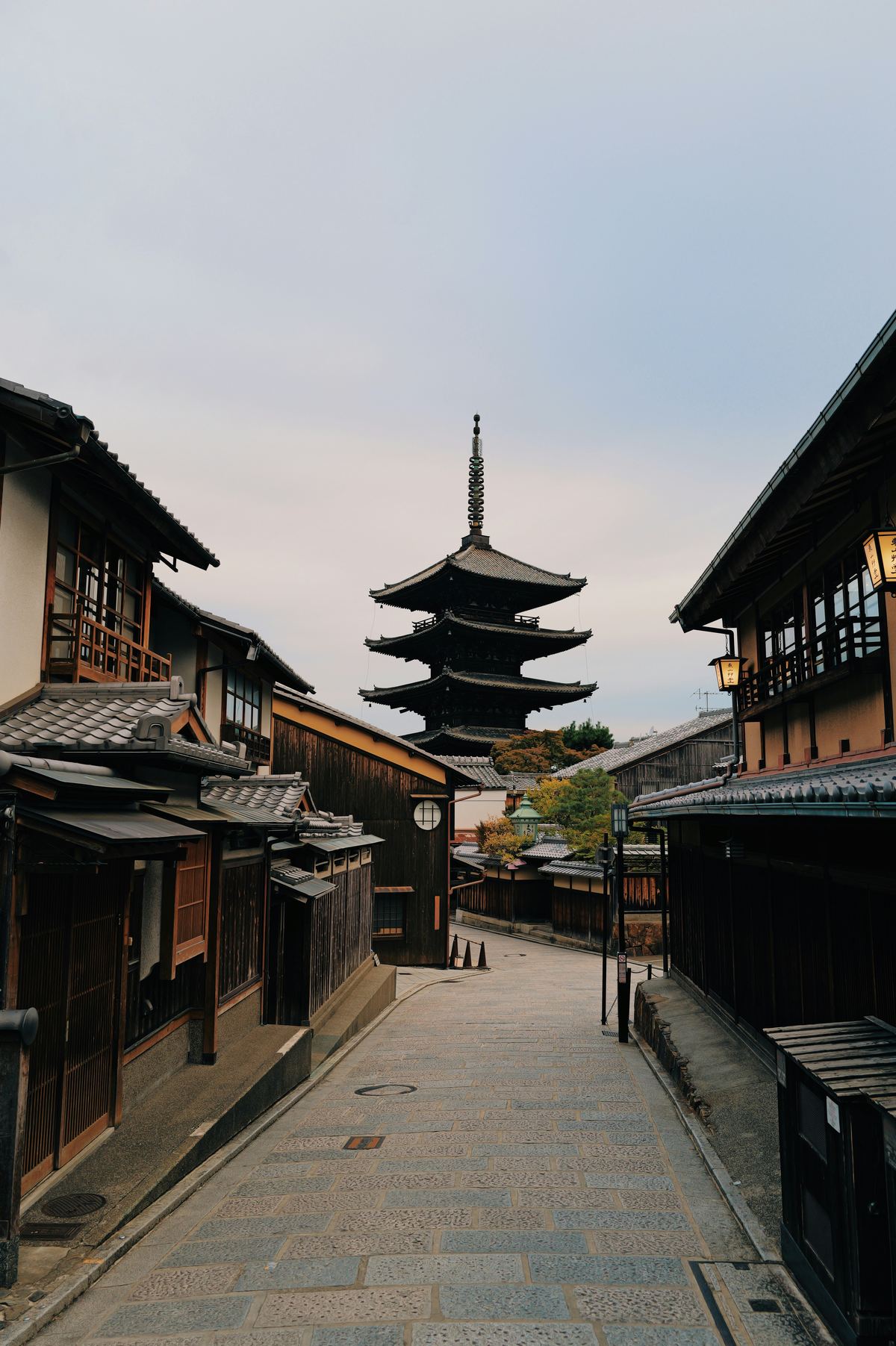
Half the pleasure of visiting Kiyomizu-dera is the walk there. The approach climbs through Sannenzaka and Ninenzaka, two beautifully preserved lanes of traditional machiya townhouses that have stood for centuries. Lined with teahouses, ceramics shops, and sweet shops selling yatsuhashi, Kyoto's signature cinnamon rice cookies, the lanes are as much an attraction as the temple itself — and best explored in the early morning before the crowds arrive.
Tip: Visit at opening time to see the stage before the tour groups arrive. Below the main hall, the Otowa Waterfall lets you drink from three streams, each said to grant a different wish — health, longevity, or success.
Related reading: When to see Kyoto's cherry blossoms and a perfect 3-day Kyoto itinerary.