Most travellers hear “rainy season” and picture cancelled plans, damp socks, and grey skies. In Kyoto, the reality is more subtle — and far more beautiful. Tsuyu (梅雨), the Japanese rainy season that runs from roughly mid-June to mid-July, is when the city’s gardens turn electric green, the hydrangeas burst into colour, and the crowds that choke every landmark in spring and autumn simply melt away.
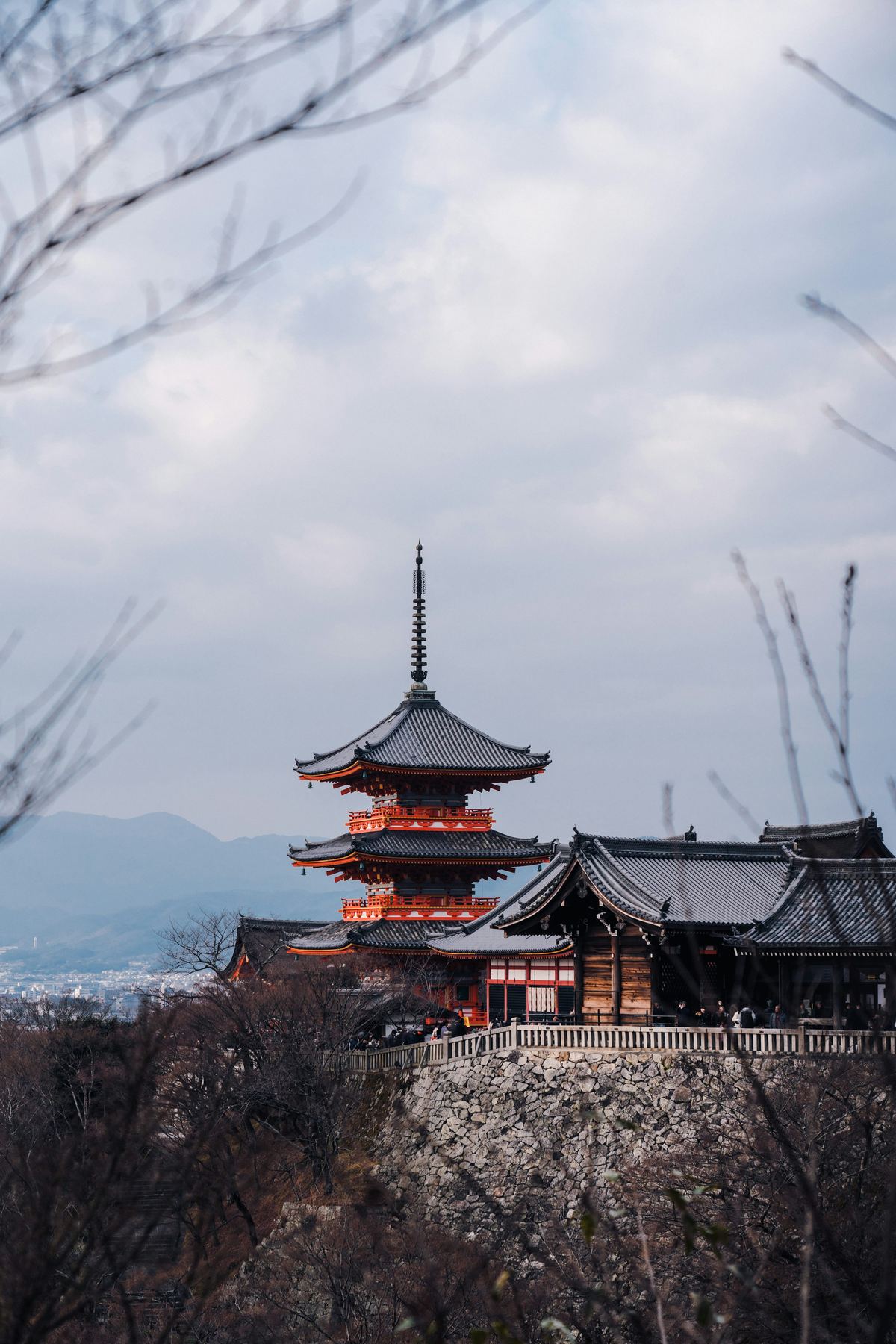
June is Kyoto’s traveller’s secret: the same Kiyomizu-dera that takes twenty minutes to cross in April you’ll have nearly to yourself in June. Here’s why the rainy season is secretly the best time to visit — and exactly how to plan for it.
What Is Tsuyu?
Tsuyu (梅雨, literally “plum rain”) is Japan’s early-summer rainy season, created when warm, moist air from the south collides with cooler air over the islands. In Kyoto it typically runs from mid-June to mid-July, bookended by the humidity of late spring and the fierce heat of high summer.
The rain doesn’t fall constantly. It arrives in bands: gentle drizzle, sudden heavy downpours that pass in twenty minutes, then brilliant clearing skies. This rhythm is actually a gift — showers clear crowds, and the moments of sun between storms make the city glow. Temples and shrines are largely roofed and their walkways sheltered, so a short pause in a tea house often sees the rain through.
June averages about 190mm of rain across 12–14 rainy days, with daytime temperatures a comfortable 24–28°C — far more pleasant than the 35°C+ humidity of August.
Why Visit Kyoto in the Rain
Empty Temples and Shrines
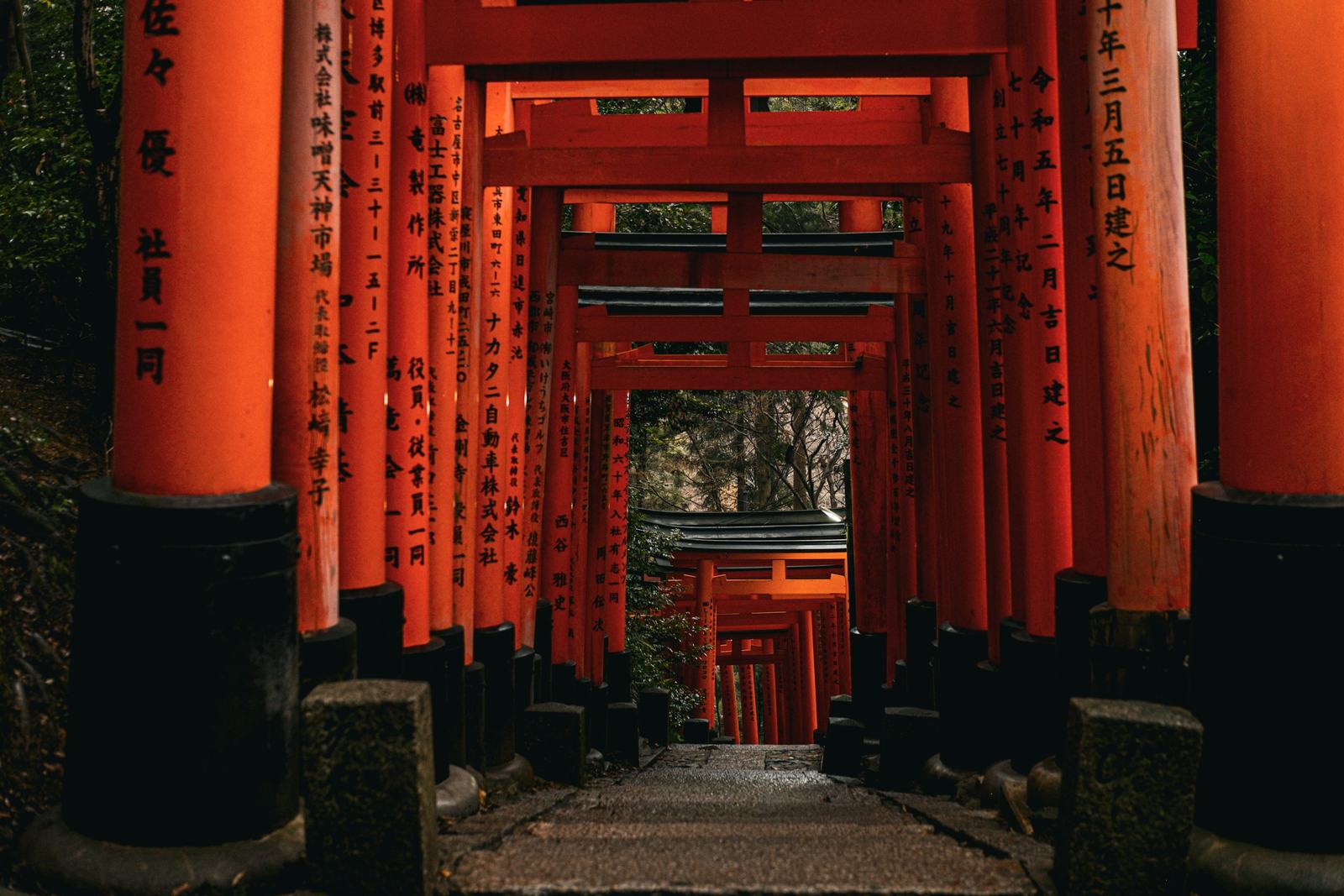
June and early July are the quietest months of the entire tourism year in Kyoto. The cherry blossom hordes of April and the leaf-peepers of November are gone, and the school-trip season hasn’t peaked. At Fushimi Inari, the famous thousand-torii tunnel is walkable at your own pace. At Kinkaku-ji, you can actually get a clear photo of the golden pavilion without ten other tourists in frame. The rain keeps even domestic visitors indoors, which means you get the Japan the brochures show.
Gardens at Their Greenest
Moss is Kyoto’s hidden masterpiece, and June is when it’s at its absolute peak. The famous moss gardens of Saiho-ji (Kokedera) and Gio-ji look almost radioactive green after weeks of rain. Maple leaves, still tender and lime-green, drip with water droplets. The ponds at Tenryu-ji and Nanzen-ji fill and reflect the canopy. If you love gardens, no other month rewards you like this one.
Hydrangeas in Bloom
June is ajisai (hydrangea) season, and Kyoto is dotted with spots that celebrate them. The most famous are Kifune Shrine in the northern hills and Chikurin-in near Uji — both blanketed in hundreds of blue, purple, and pink blooms. More on these below.
Comfortable Temperatures
Rainy season is warm but not hot: typically 24–28°C with high humidity. You can walk the Philosopher’s Path in the morning, duck into a museum mid-afternoon, and still be comfortable in the evening. No August heat exhaustion, no winter layering.
What to Do on Rainy Days
Every Kyoto itinerary needs a few indoor cards to play when the sky opens. Here are the best:
Museums
The Kyoto National Museum (top-class rotating exhibitions, quiet galleries) and the Kyoto City KYOCERA Museum of Art (modern and contemporary works in a gorgeous 1933 building) are the standouts. For something quirkier, the International Manga Museum is a full day of browsing for fans. Check closing days — museums in Kyoto typically close on Mondays.
A Tea Ceremony
Rain and matcha are a natural pairing. Many tea houses offer intimate, bookable ceremonies — the sound of rain on the roof while whisking your own bowl of matcha is one of Kyoto’s most meditative experiences. The Camellia Tea Ceremony near Kiyomizu-dera and the Urasenke tea school experiences are reliable choices. Book ahead; rainy-day slots fill up fast.
Depachika (Basement Food Halls)
Kyoto Station’s Isetan and The CUBE basements are a Japanese institution: floor after floor of beautifully packaged pickles, wagashi (traditional sweets), bento, and prepared foods. Rainy days were made for grazing your way through a depachika. Grab a takeaway lunch, then find a seat with a view of the station’s glass roof.
An Onsen Day
Yes, Kyoto has onsens. The Funaoka Onsen in the north (Kyoto’s oldest, a gorgeous 1923 wooden bathhouse) is an afternoon of pure relaxation, and Tenzan-no-yu in Arashiyama has several indoor and outdoor baths. There’s nothing better than steaming out the damp chill after a day of drizzle. Note: tattoos are typically not allowed — check policies in advance.
Nijo Castle
Nijo Castle was designed for rainy-season diplomacy. Its famous “nightingale floors” were built to sing with every footstep (a security feature against assassins), and the opulent interiors are best appreciated from under the sheltered corridors as rain streams off the roof. In June the moat lilies are blooming, and the gardens are lush without being crowded.
Packing for the Rain
Getting tsuyu right is 80% packing:
- Compact umbrella — buy one for ¥500 at any konbini (Seven-Eleven, FamilyMart, Lawson) on arrival. Clear plastic umbrellas are cheap and surprisingly wind-resistant; nicer folding ones cost ¥1000–2000 at department stores.
- Rain jacket — a breathable shell beats an umbrella on busy streets and bike rides. Layer it over a light hoodie.
- Waterproof shoes — this is non-negotiable. Wet socks will ruin a day faster than the rain itself. Trail runners or waterproof walking shoes are ideal; bring a second pair for evenings.
- Quick-dry layers — humidity means you’ll sweat, and synthetic, fast-drying fabrics mean you’ll recover by the next sight.
- Small towel — every Japanese traveller carries one (a tenugui). It dries seats, wipes glasses, and soaks up surprise drips.
- Plastic bag / dry sack — for electronics and your passport when moving between sites.
Best Hydrangea Spots
Kifune Shrine
Perched at the northern end of the Kibune gorge, Kifune Shrine is the spiritual home of the hydrangea festival in Kyoto. In June, hundreds of ajisai line the mossy stone steps leading to the shrine, framed by the deep green valley. It’s about 30 minutes from central Kyoto by Keihan train to Kibuneguchi, then a short bus — and the cool mountain air is a relief from city humidity.
Chikurin-in
Part of the Mimuroto-ji temple complex in Uji, Chikurin-in (the “bamboo grove temple”) is home to more than 10,000 hydrangea plants across 5,000 square metres. The path winds through tiers of blue and purple blooms in every direction, with the sound of the Uji River below. Early morning, before the day-trippers arrive, is magical.
Hasedera (Nara)
A 45-minute train from Kyoto, Hasedera in Nara is one of Japan’s three great hydrangea temples — and a sight to behold. More than 10,000 hydrangeas blanket the hillside terraces from mid-June, and the main hall’s dramatic veranda offers sweeping views over the valley. If you have a full day to spare, combine it with Todai-ji’s Great Buddha in Nara Park.
Photography in the Rain
Rain is a photographer’s gift — you just have to protect the gear. A clear umbrella held low over your lens does double duty, and a plastic bag with a rubber band is the classic lens raincoat.
Reflections on Torii Gates
After a downpour, Fushimi Inari’s puddled paths become mirrors. The famous red torii tunnel reflects perfectly in the wet stone and polished surfaces — shoot low, at ground level, in the first half hour after the rain stops, when the light is soft.
Misty Temples
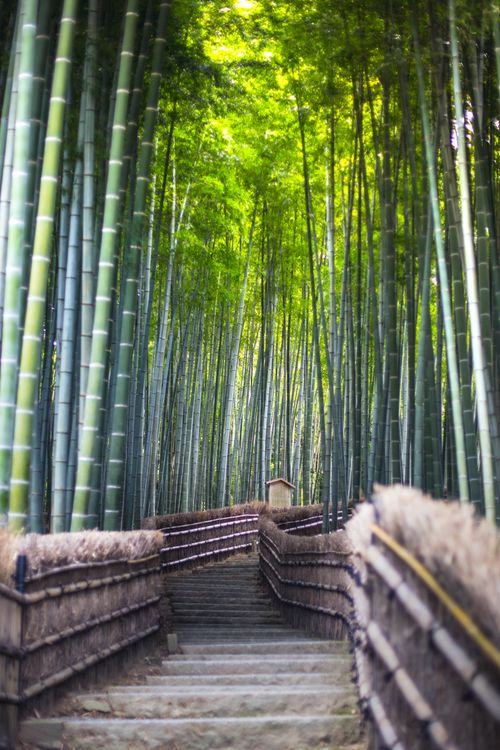
Steam rising off moss and stone after a shower gives temples like Gio-ji and the Arashiyama bamboo grove an almost supernatural atmosphere. The moisture-diffused light is flat and flattering, eliminating harsh shadows — perfect for long exposures of waterfalls and streams.
Glowing Green Moss
Water droplets on moss act like tiny lenses, catching and magnifying light. Macro shots of dew-covered moss, ferns, and maple leaves are the signature image of Kyoto’s rainy season — and the colour saturation after rain is unmatched at any other time of year.
The Verdict: Tsuyu Is Underrated
Kyoto in the rainy season trades postcard-perfect sunny days for something rarer: atmosphere, colour, and emptiness. You’ll walk through temples that would be shoulder-to-shoulder a month earlier. You’ll see gardens at a lushness impossible in dry months. And the hydrangeas — those only exist in June, nowhere else, in any other month.
Pack for the rain, plan a few indoor backups, and treat the downpours as an invitation to slow down. Sit in a tea house. Watch the steam rise off moss. That’s Kyoto at its most contemplative. Bring an umbrella.